
The night Cutler Ridge discovered that a few hours can divide a lifetime into “before” and “after.”
There are storms you remember by the year, and there are storms by which you measure every year that came afterward. Hurricane Andrew belongs to the second kind.
For those of us living in Cutler Ridge in August 1992, the calendar was permanently divided into two unequal parts: life before Andrew and life after Andrew. Before Andrew, a hurricane warning was something discussed over canned tuna, batteries and plywood. After Andrew, it was scripture.
South Florida had grown a little too comfortable by then. We had sunshine, air conditioning, mango trees and the dangerous confidence of people who had heard many warnings without ever meeting the thing being warned about. We knew hurricanes existed in roughly the same way people know alligators exist: certainly, but preferably someplace else.
Andrew corrected that misunderstanding.
Sunday, August 23: Waiting for the Unreasonable
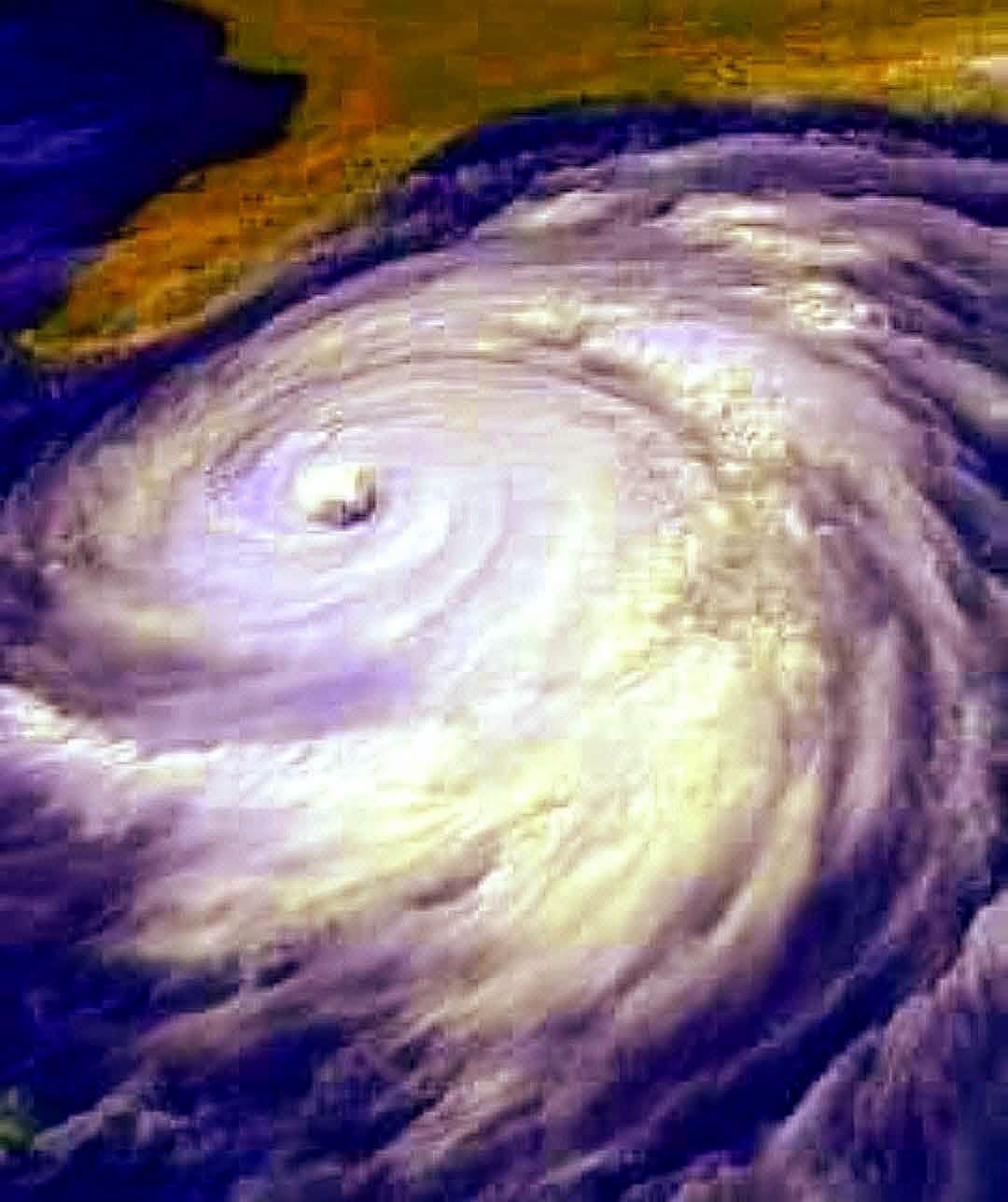
The warning for South Florida was issued Sunday morning, August 23, giving the area about 21 hours before landfall. By then Andrew had crossed the Bahamas and strengthened with astonishing speed. On television the satellite picture looked almost too perfect—a compact white wheel with a neat dark eye. Nature is often at its most suspicious when it appears well organized.
All day, Cutler Ridge prepared. Windows disappeared behind plywood. Patio furniture was carried indoors. Bathtubs were filled. Neighbors traded nails, batteries, rumors and advice, each commodity being offered with equal confidence and varying usefulness.
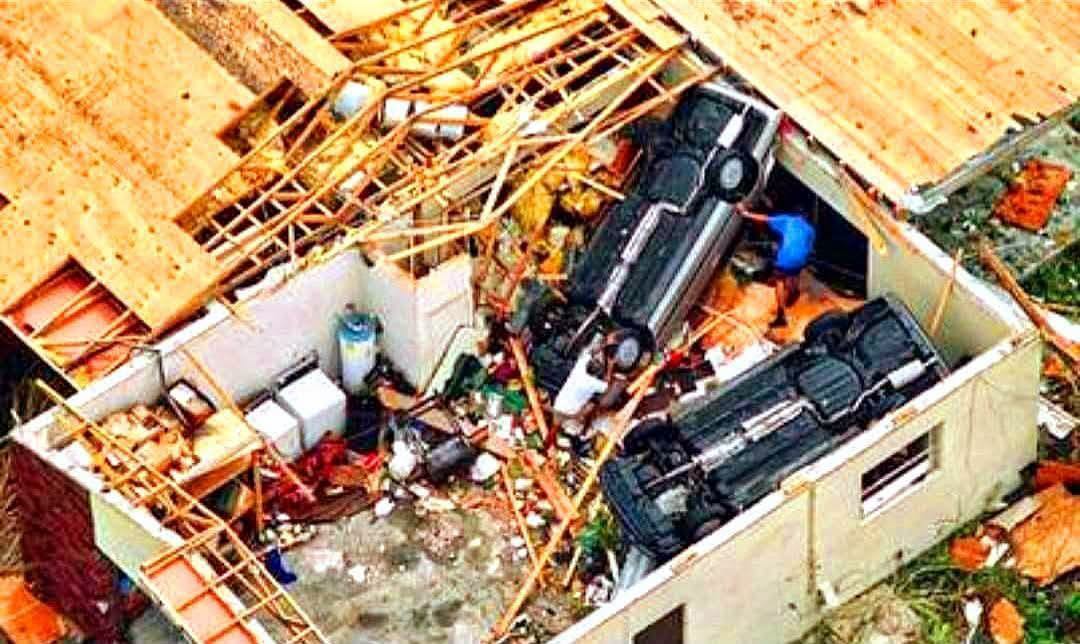
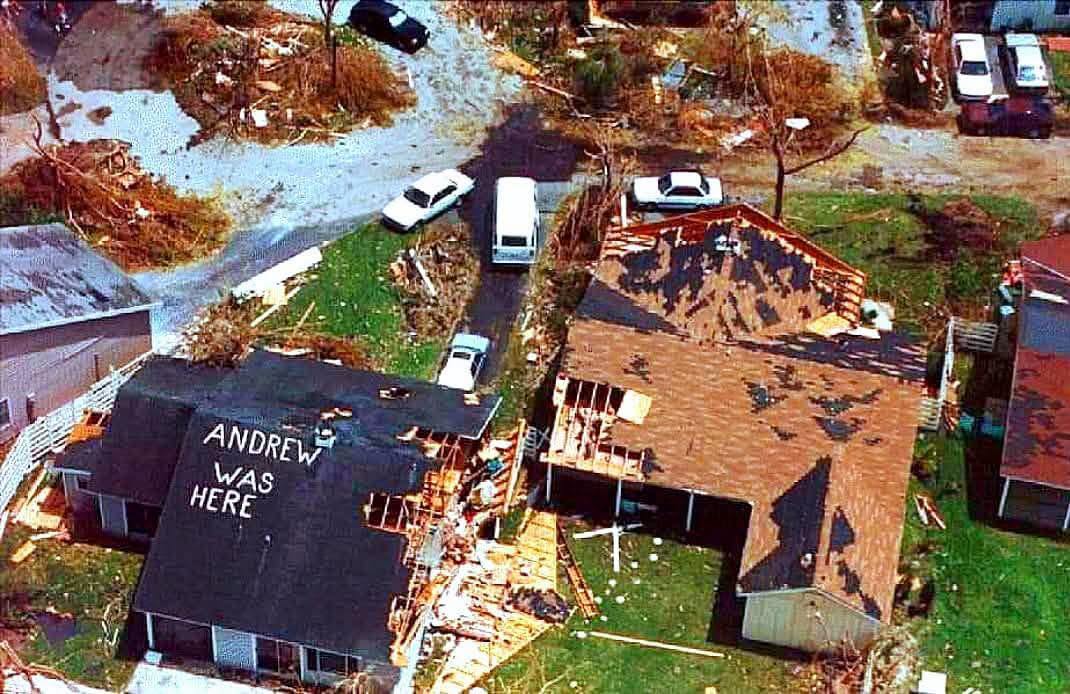
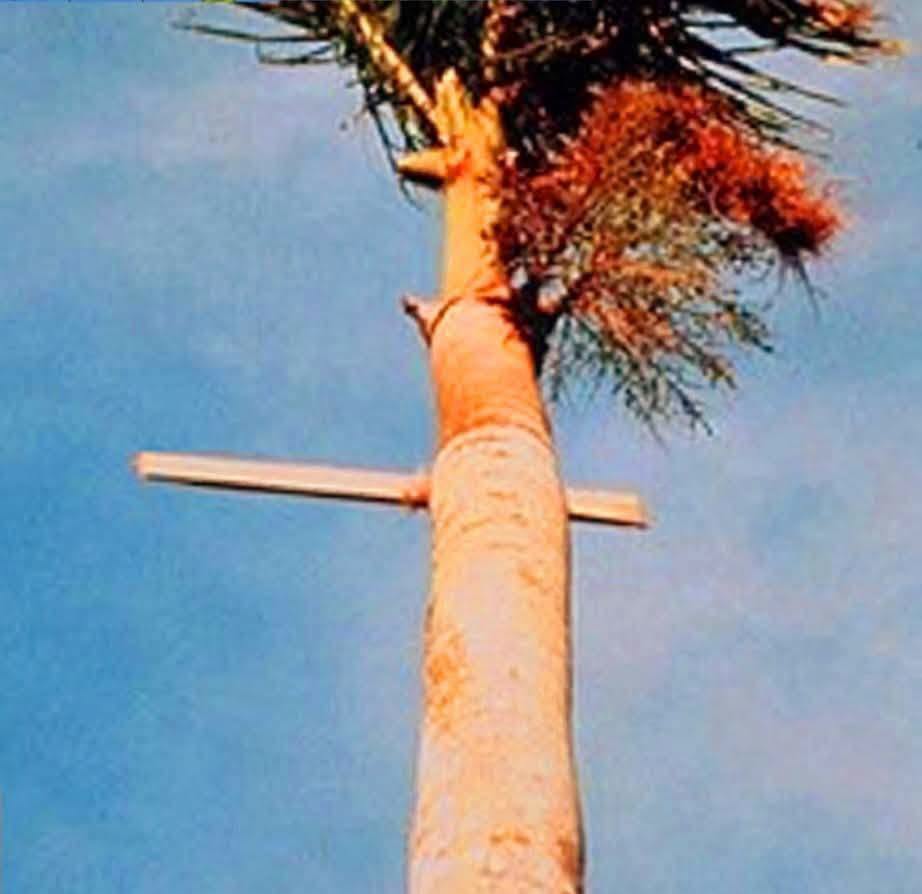
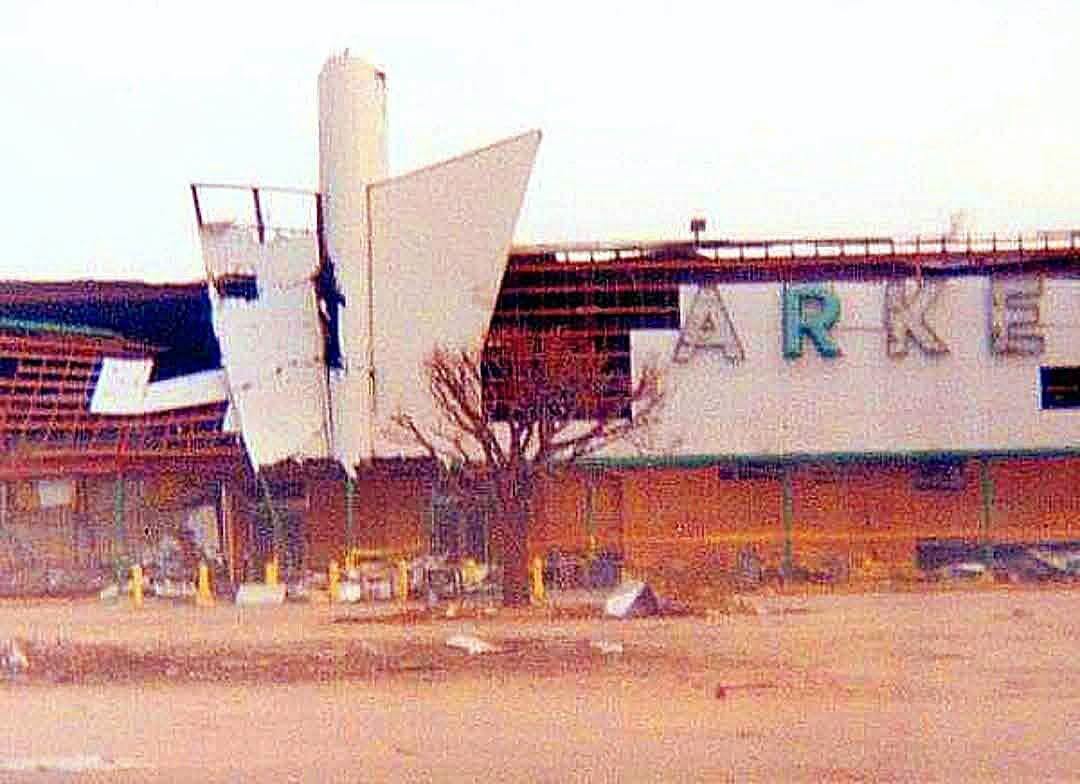
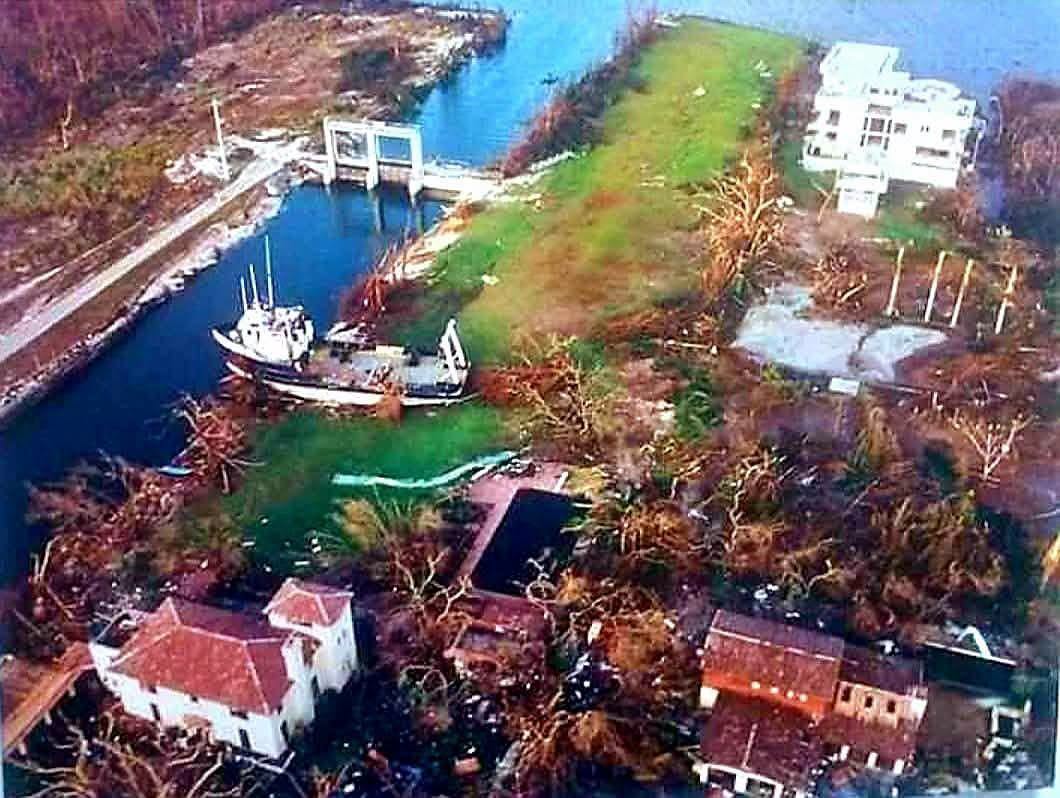
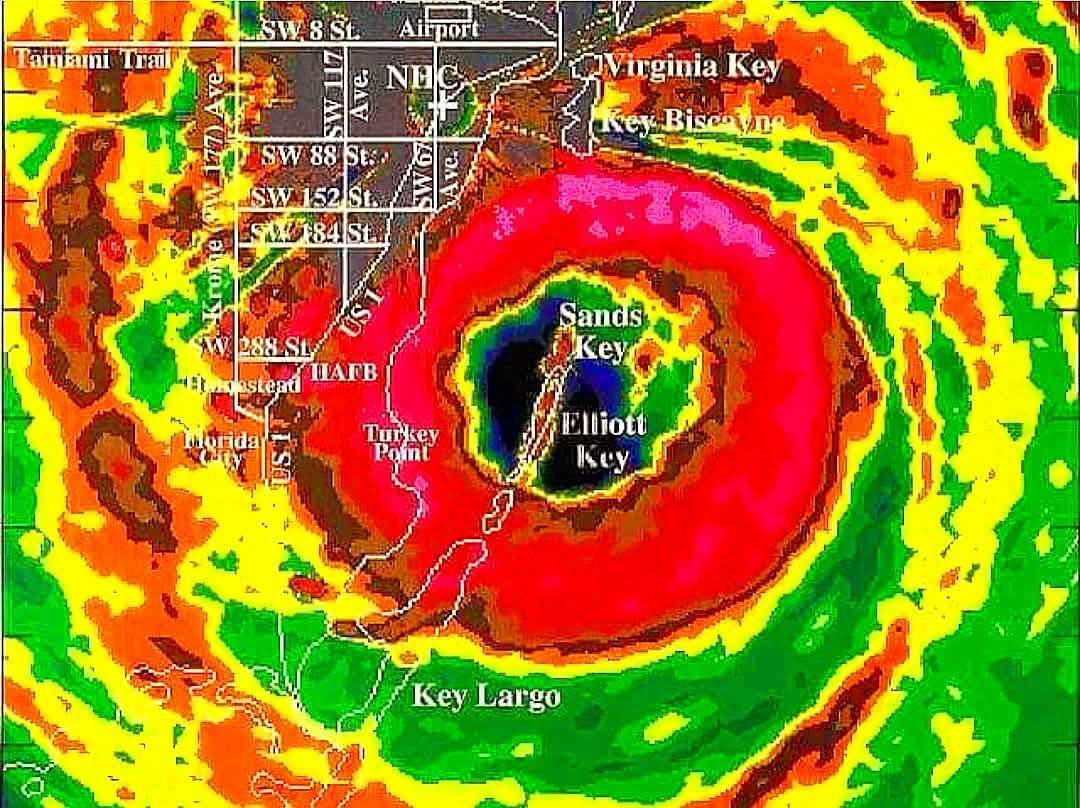
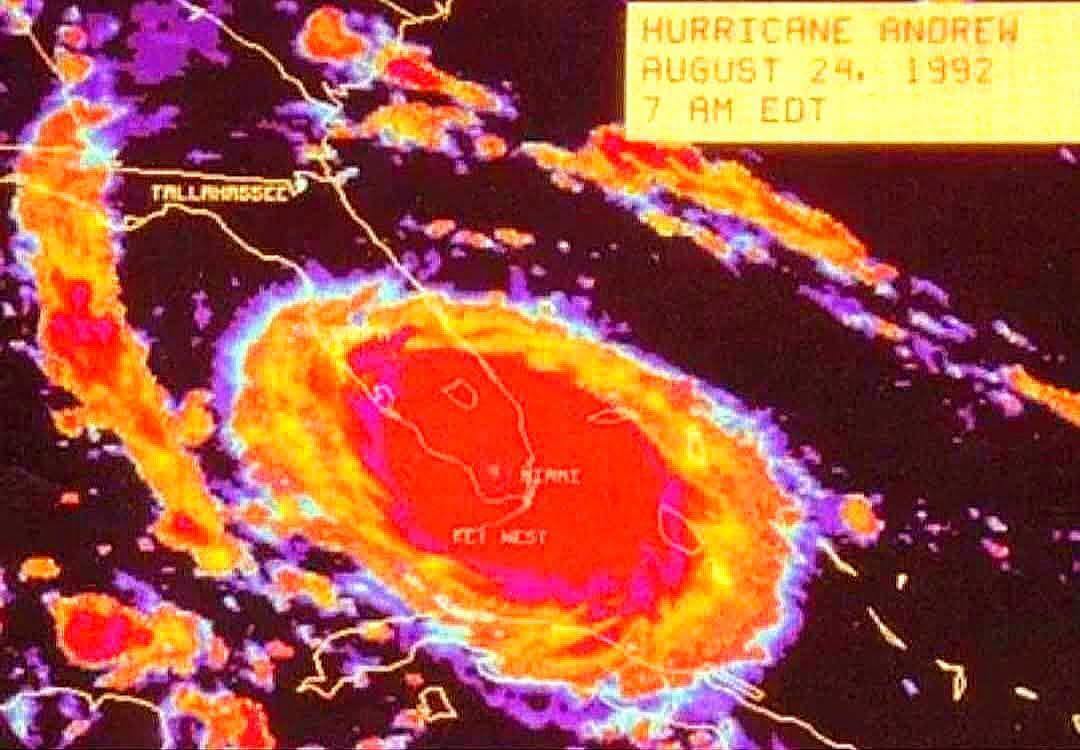
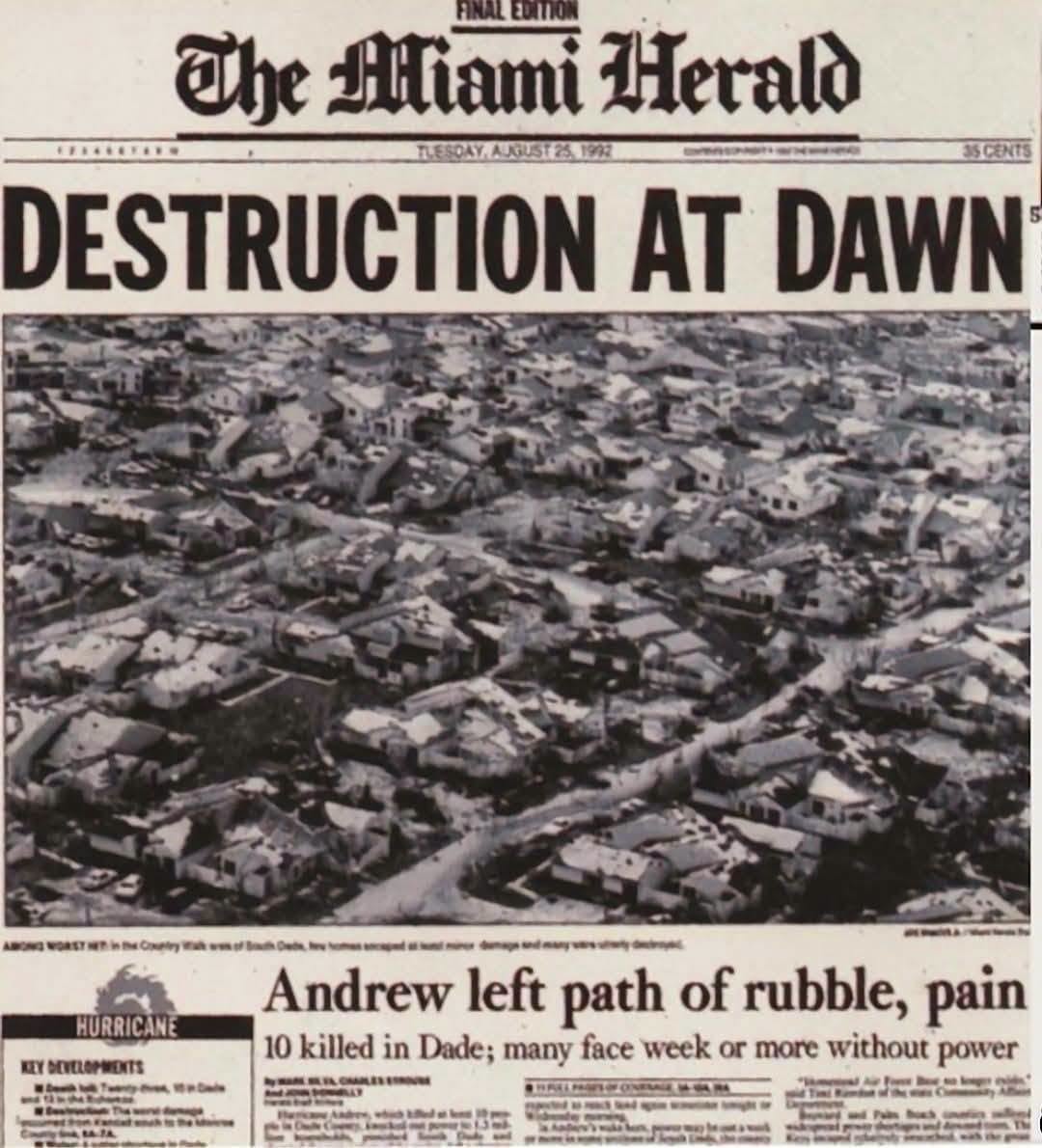
Scenes from the approach and aftermath of Hurricane Andrew.
By Sunday evening, families had chosen their safest rooms. Mattresses were dragged into hallways. Children were told it would be all right because adults have a long tradition of making promises on behalf of the weather.
Around 10 p.m., the first serious feeder bands began arriving. Rain struck in bursts. The wind came and went like a man testing a locked door. At 9:56 p.m., a tornado watch had been issued for South Florida through Monday morning. The house was still a house, the street was still a street, and the world outside had not yet been rearranged.
That would change before breakfast.
Monday, August 24: The Hours That Changed South Dade
Sometime after midnight, ordinary rain became something else. By 2 or 3 a.m., sleep was mostly ceremonial. The power failed in many places. Without electric lights, every sound grew larger. The wind did not merely blow; it groaned, hammered and searched for weaknesses. Roof shingles became ammunition. Fences took up aviation. Anything left outside began applying for residence somewhere else.
Before 5 a.m., the strongest hurricane-force winds reached the area.
At 4:40 a.m. Eastern Daylight Time, Andrew’s center crossed Elliott Key. The storm carried maximum sustained winds of about 165 miles per hour and a central pressure of 922 millibars—a Category 5 hurricane, compact in size and monstrous in force.
At approximately 5:05 a.m., only 25 minutes later, the center made mainland landfall near Homestead.
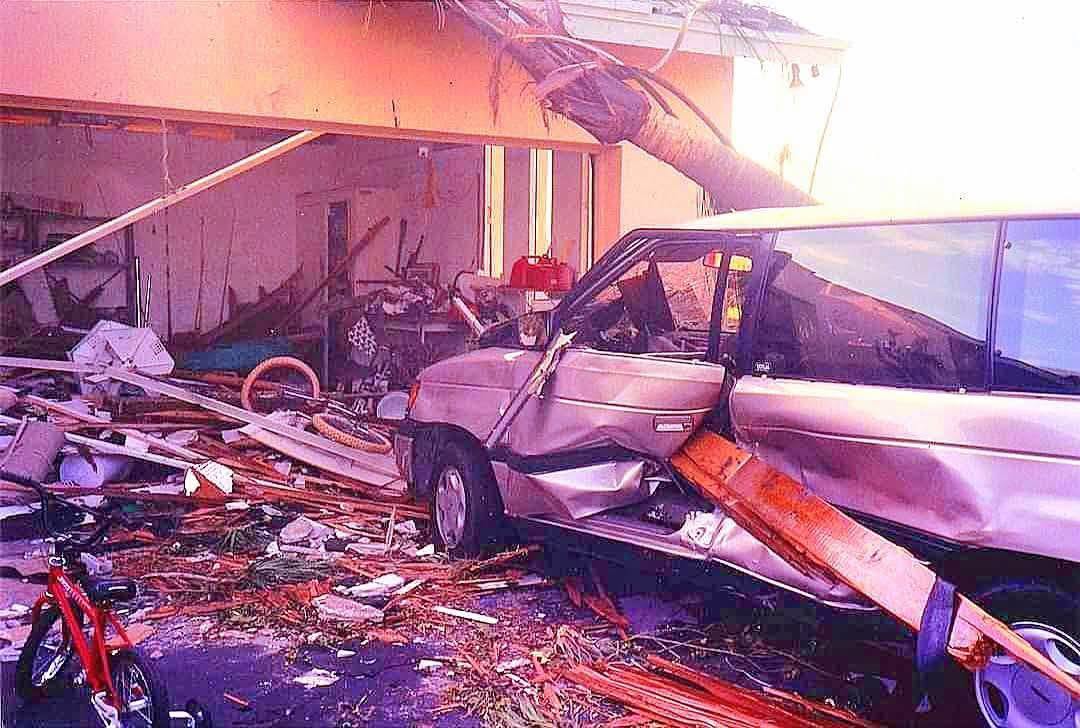
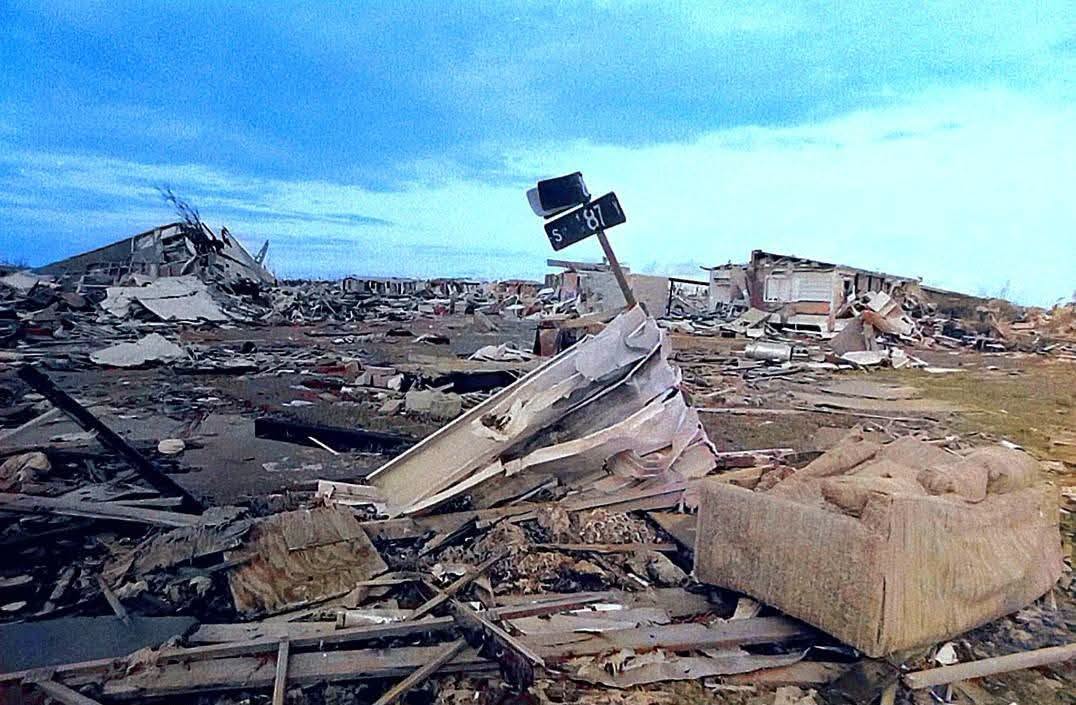
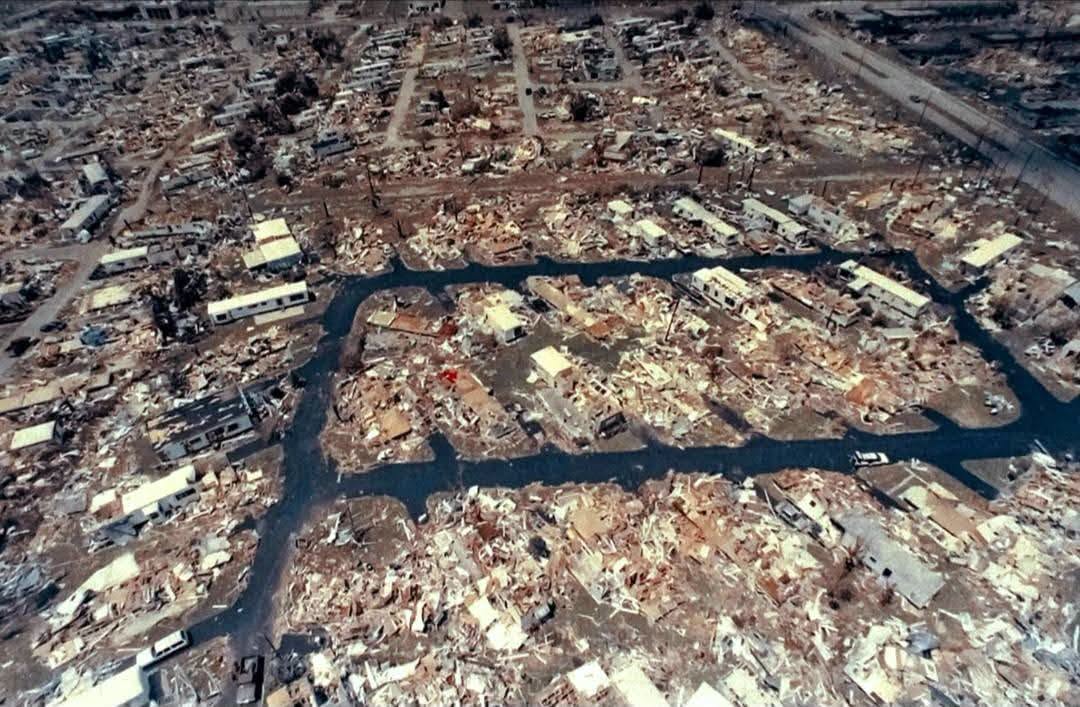
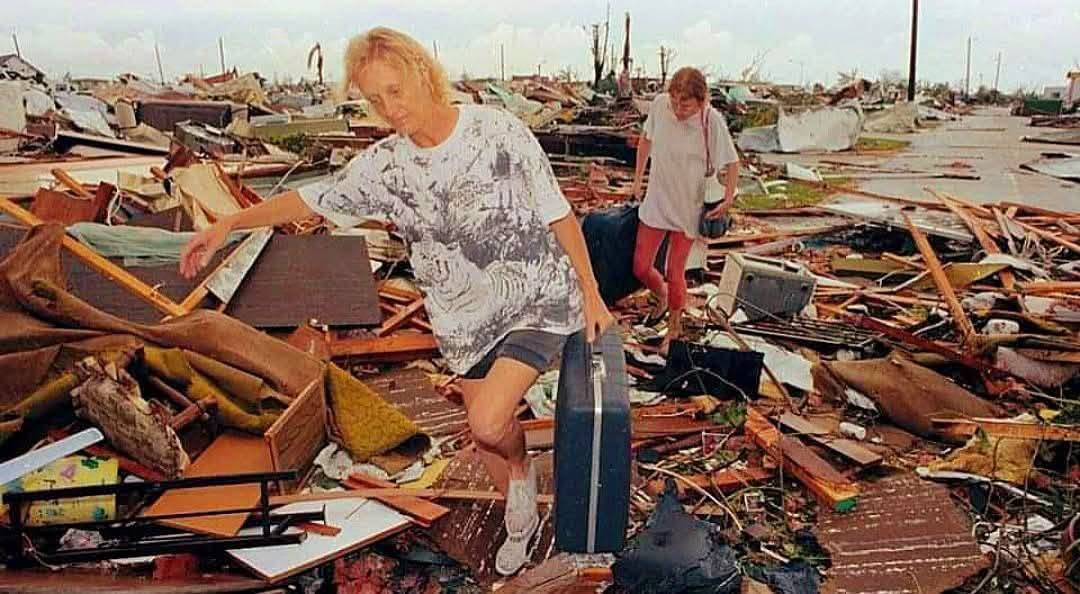
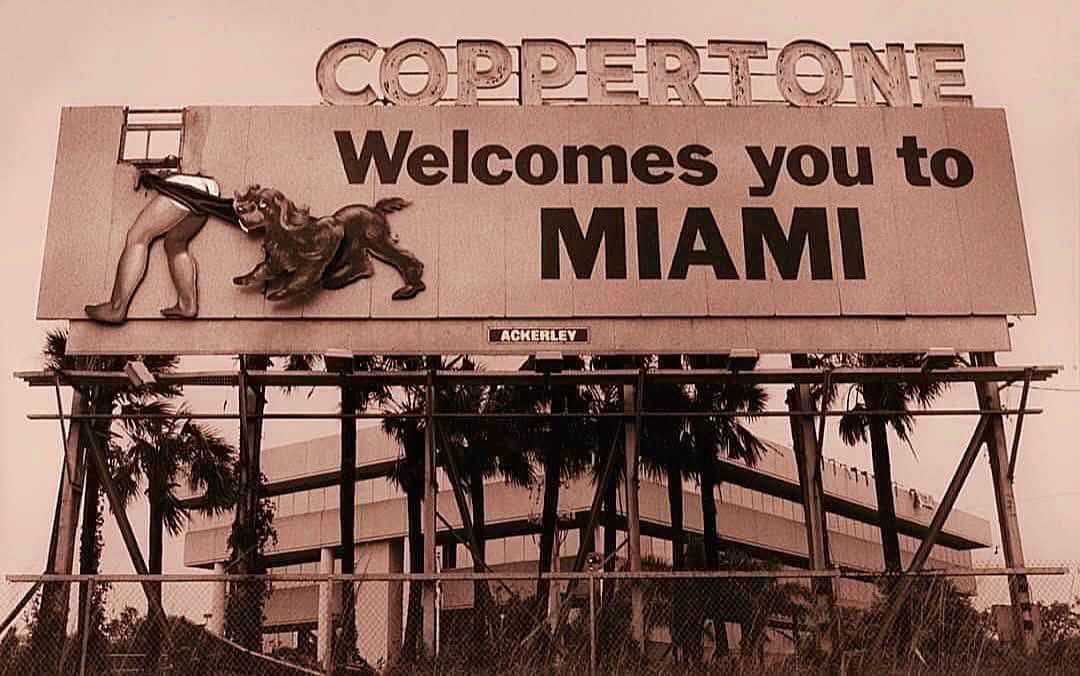
Andrew’s compact core produced catastrophic damage across southern Dade County.
Cutler Ridge lay in the storm’s catastrophic core. The center tracked a little to the south, so many residents never received the famous peaceful eye that people imagine comes with every hurricane. Instead, the northern eyewall delivered its own argument: roofs lifting, windows breaking, garage doors folding and walls shuddering as if the entire neighborhood had been placed inside an enormous machine.
There is an old belief that a house is an immovable object. Andrew, being unfamiliar with local real-estate customs, treated that belief as a suggestion.
Inside, time behaved badly. Five minutes sounded like an hour. Every crash produced the same question: Was that our roof, the neighbor’s roof, or something that used to belong three streets away? Families crowded into bathrooms, closets and hallways. People held children, pets, mattresses and one another. The safest room became the whole universe.
The worst of Andrew’s assault on South Dade lasted only a few hours. By roughly 7 a.m., the core was moving west across the peninsula. At 8:31 a.m., satellite imagery showed the hurricane nearing the Gulf side of Florida.
The storm was leaving.
The disaster was just arriving.
Morning: A Familiar Place Made Strange
Daylight did not bring relief so much as evidence.
The first look outside was difficult to understand. Roads were blocked by trees, poles and pieces of buildings. Street signs were gone. Familiar landmarks had vanished. Cars sat beneath branches and roofing. Homes had been opened to the sky. In some places, an entire block looked less damaged than dismantled.
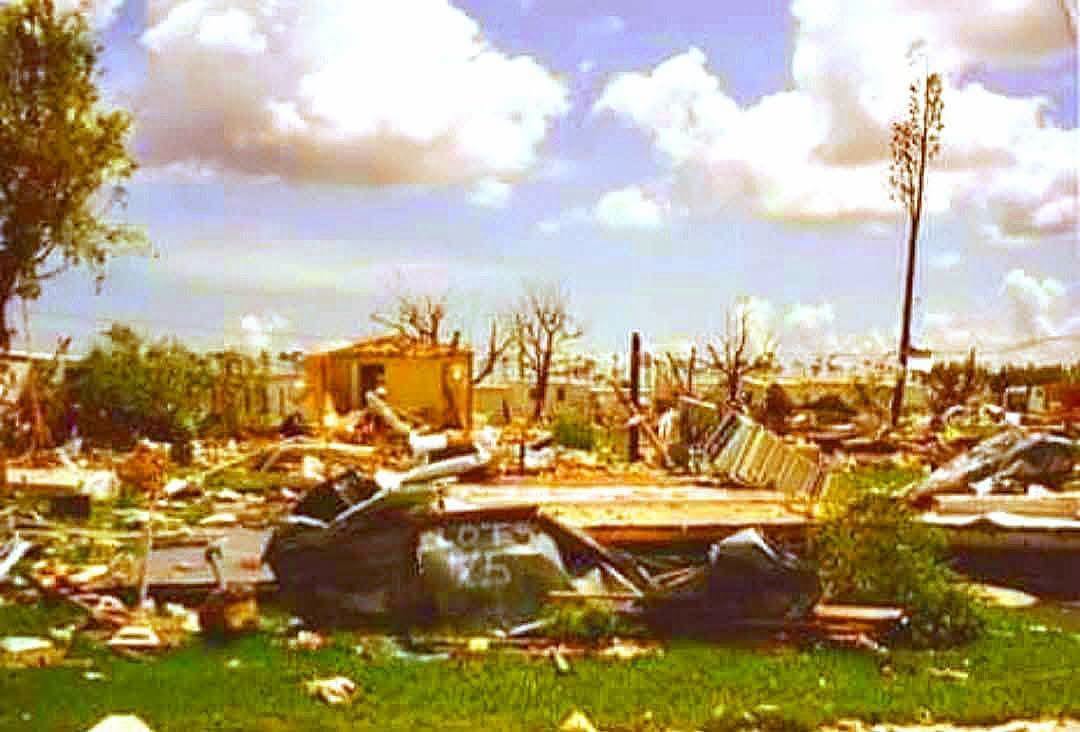
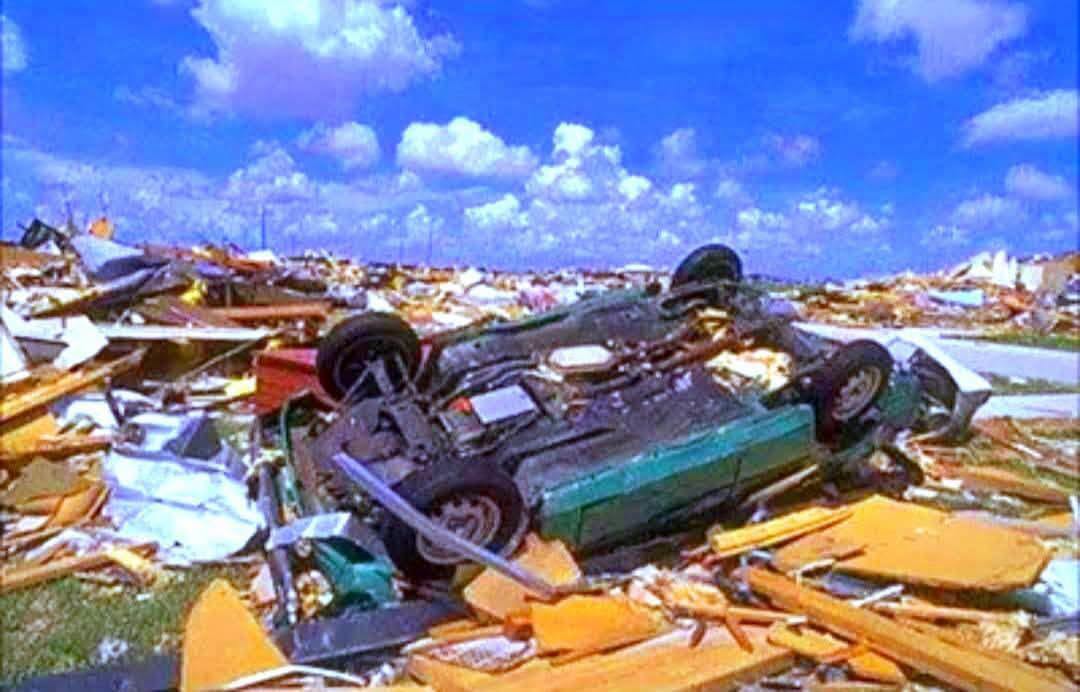
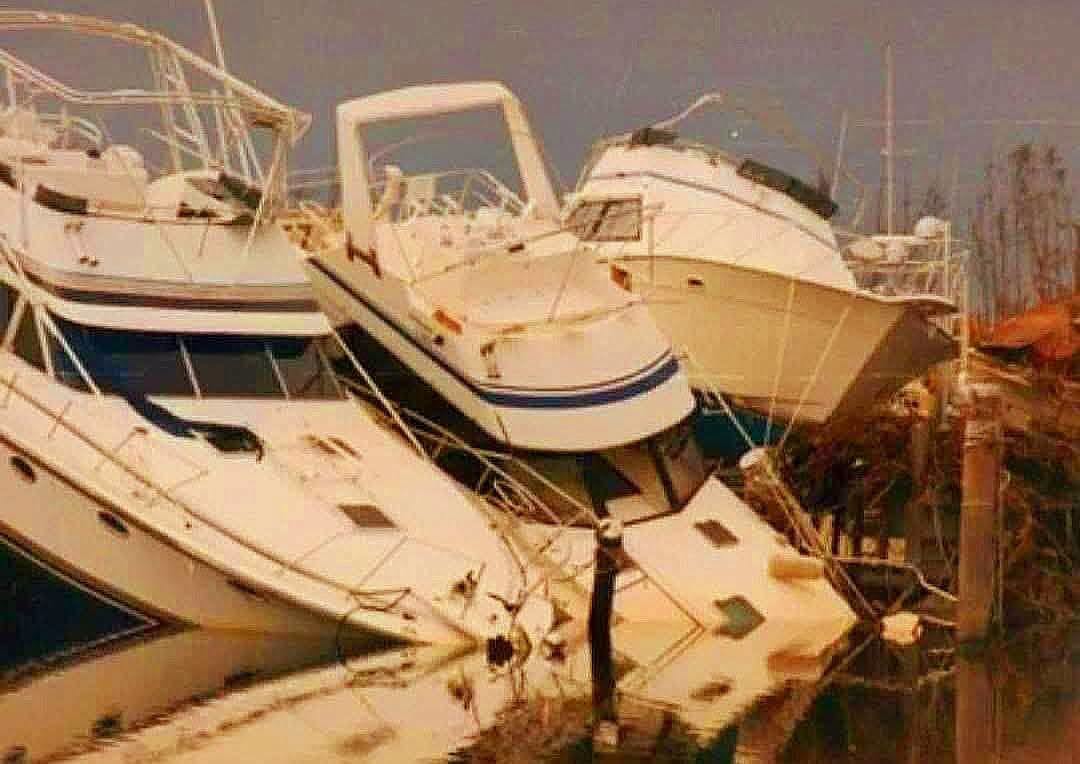
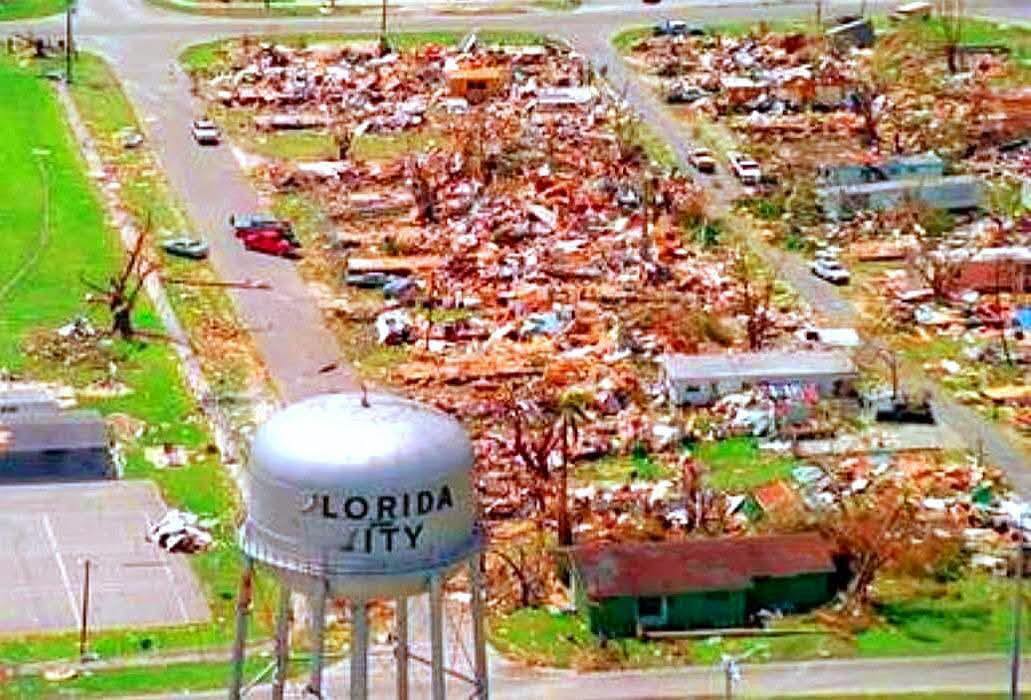
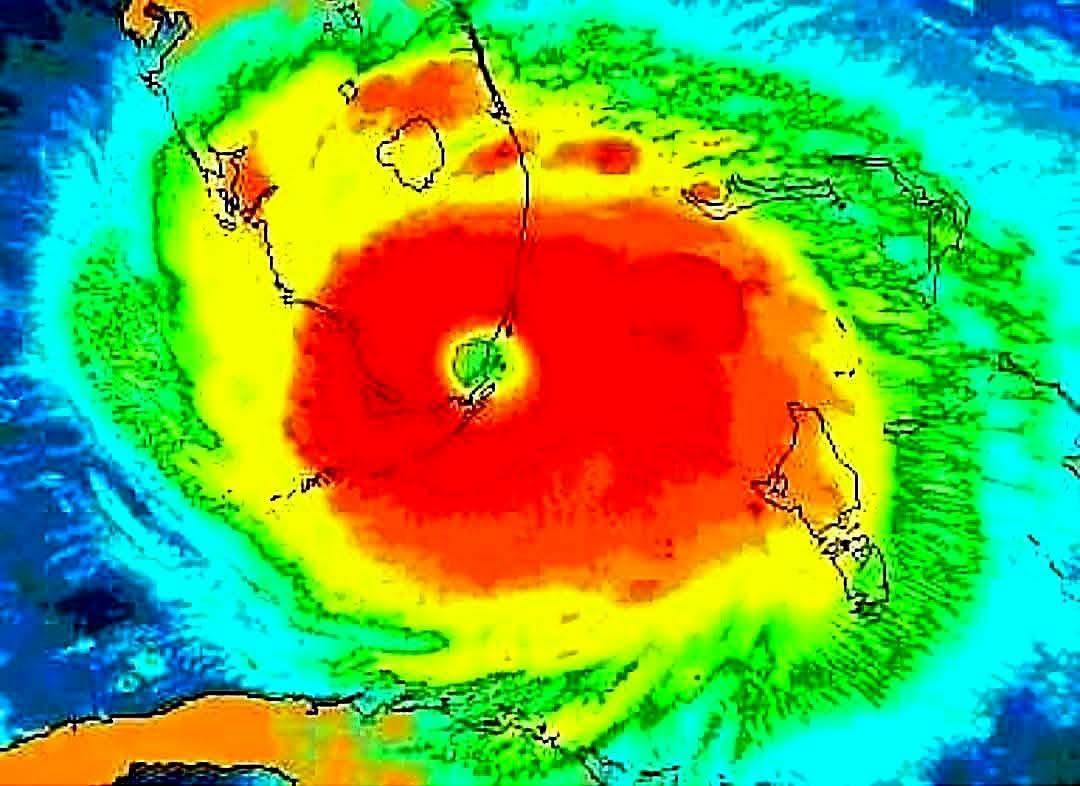
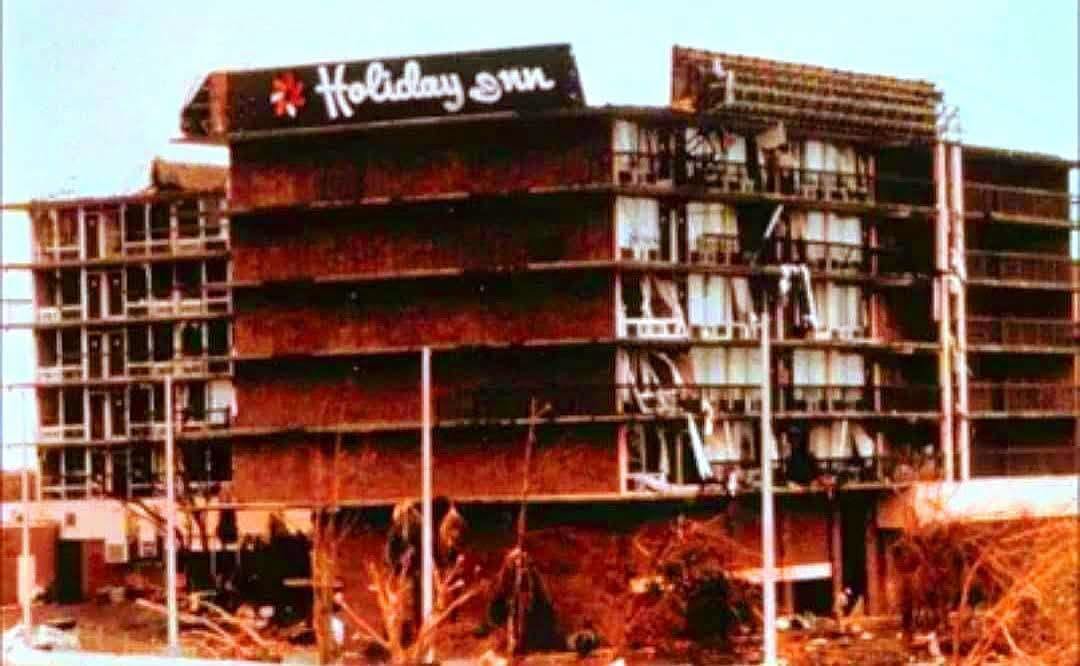
When daylight returned, familiar streets had become difficult to recognize.
Cutler Ridge had taken Category 5 conditions near the coast. Around the old Burger King world headquarters, the storm surge reached nearly 17 feet above sea level. Wind did most of the widespread damage inland, but close to Biscayne Bay, water added its own destruction.
Communication was scarce. There were no smartphones, no neighborhood social-media pages and no quick photograph sent to relatives. Telephone service failed. Radio became the thread connecting one ruined neighborhood to another. People walked outside to learn who was safe because walking outside was the only search engine available.
And then came the neighbors.
Before government forms, insurance numbers and relief trucks, there were people with crowbars, chainsaws, coolers and working hands. Someone always had a tool. Someone knew how to shut off a gas line. Someone had ice and guarded it like a precious metal. Food thawing in dead freezers was cooked and shared. The neighborhood became a government of whoever could help next.
Disaster has many faults, but it is an excellent judge of character.
How Long Did Recovery Take?
The honest answer is: which recovery?
The hurricane took only a morning to cross South Florida. Recovery ran on several different clocks.
The first recovery took days and weeks. Roads had to be cleared. Water, telephone service and electricity had to be restored. Some households regained power relatively quickly; residents in the hardest-hit parts of South Dade waited much longer. Every electric utility truck was greeted like a presidential motorcade. Ice, gasoline, tarps and clean water became the true currency of late August.
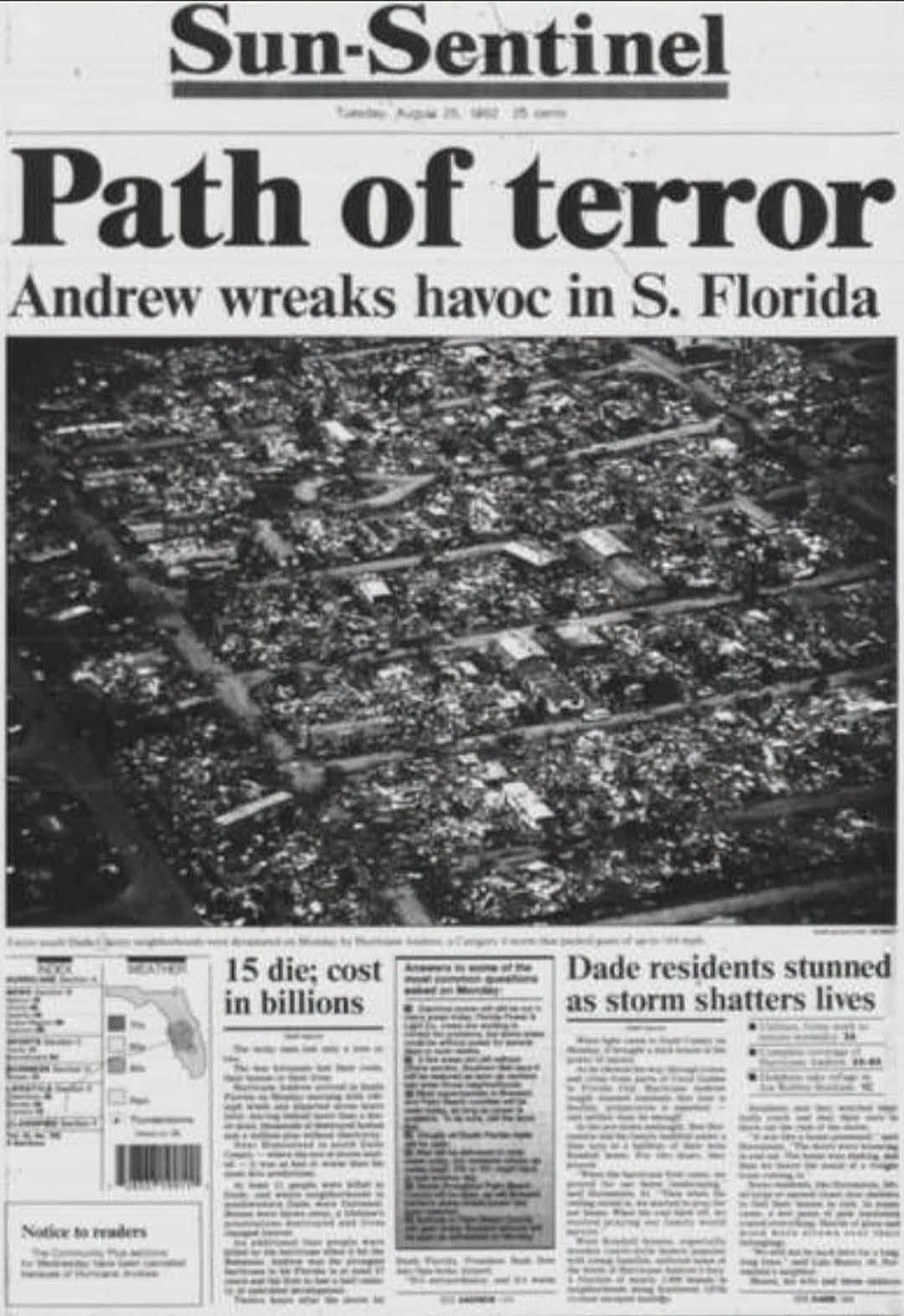
Cleanup began immediately; rebuilding would be measured in years.
The second recovery took weeks and months. Dade County’s public schools finally opened on September 14, three weeks after the storm, but several badly damaged campuses remained closed and thousands of children had to be reassigned. Two months after Andrew, the Centers for Disease Control and Prevention still described South Dade as being in a recovery phase, with damaged health facilities, displaced families, anxiety and unmet medical needs.
The third recovery took years. Tens of thousands of homes had been destroyed or badly damaged. Families lived with relatives, in rentals, hotels, trailers or partly repaired houses. Insurance claims, permits, contractors and shortages stretched rebuilding far beyond the news cycle. Much of South Dade was still repairing and rebuilding two years later, and some families remained in temporary federal housing into 1995.
For the physical community, it is fair to say that the main rebuilding took two to three years, while certain homes, businesses and public institutions took longer. For the emotional community, no completion certificate was ever issued.
Andrew also forced Florida to confront the uncomfortable fact that a building code is useful only when a building is actually built to it. Construction standards, inspections, emergency management and hurricane forecasting all changed in the years that followed. Houses grew stronger because memory had become part of the architecture.
What Cutler Ridge Carried Forward
Cutler Ridge itself would eventually become part of the Town of Cutler Bay, incorporated in 2005. The name on the map changed, damaged neighborhoods were rebuilt, new roofs replaced blue tarps, and trees grew where Andrew had stripped the landscape bare.
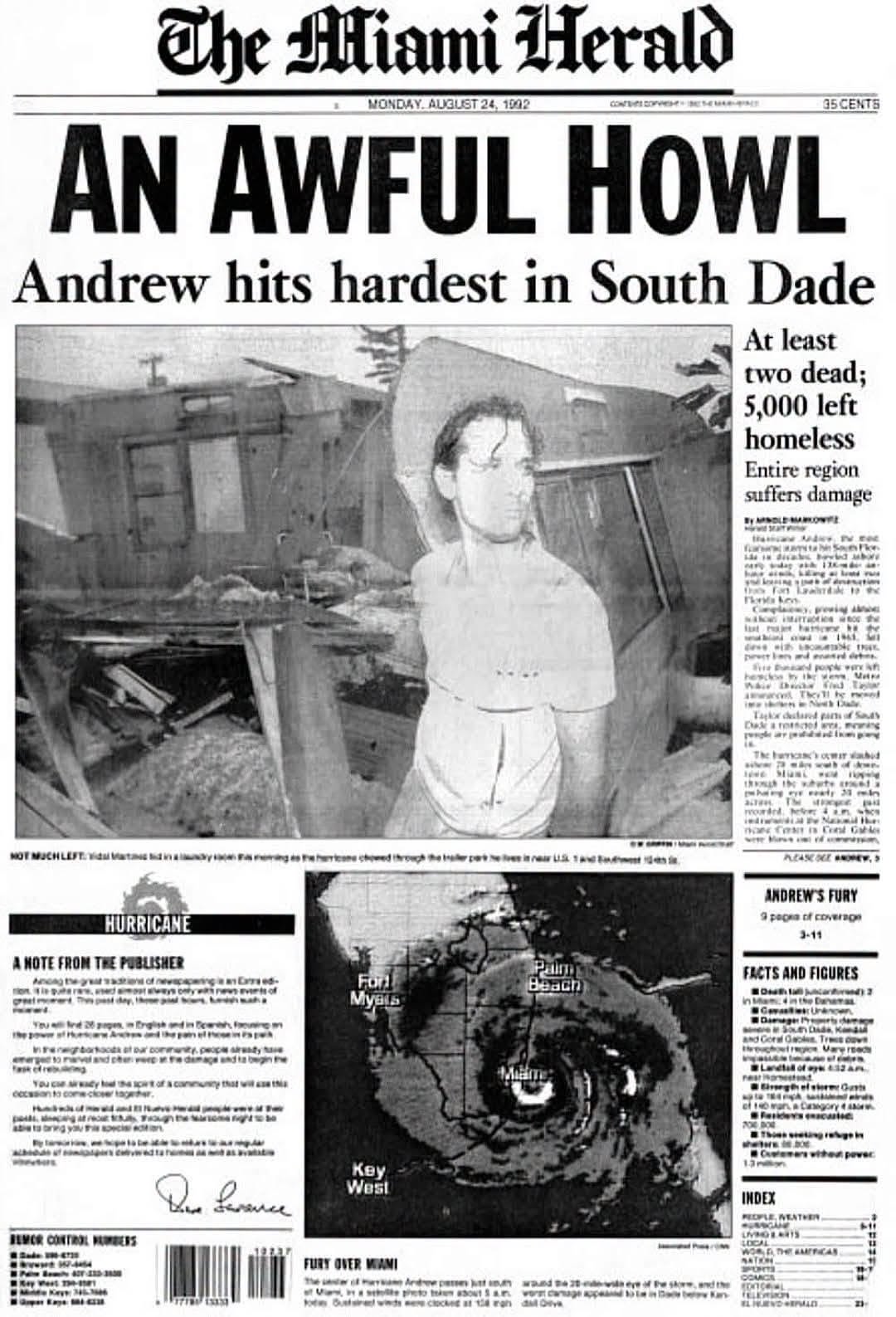
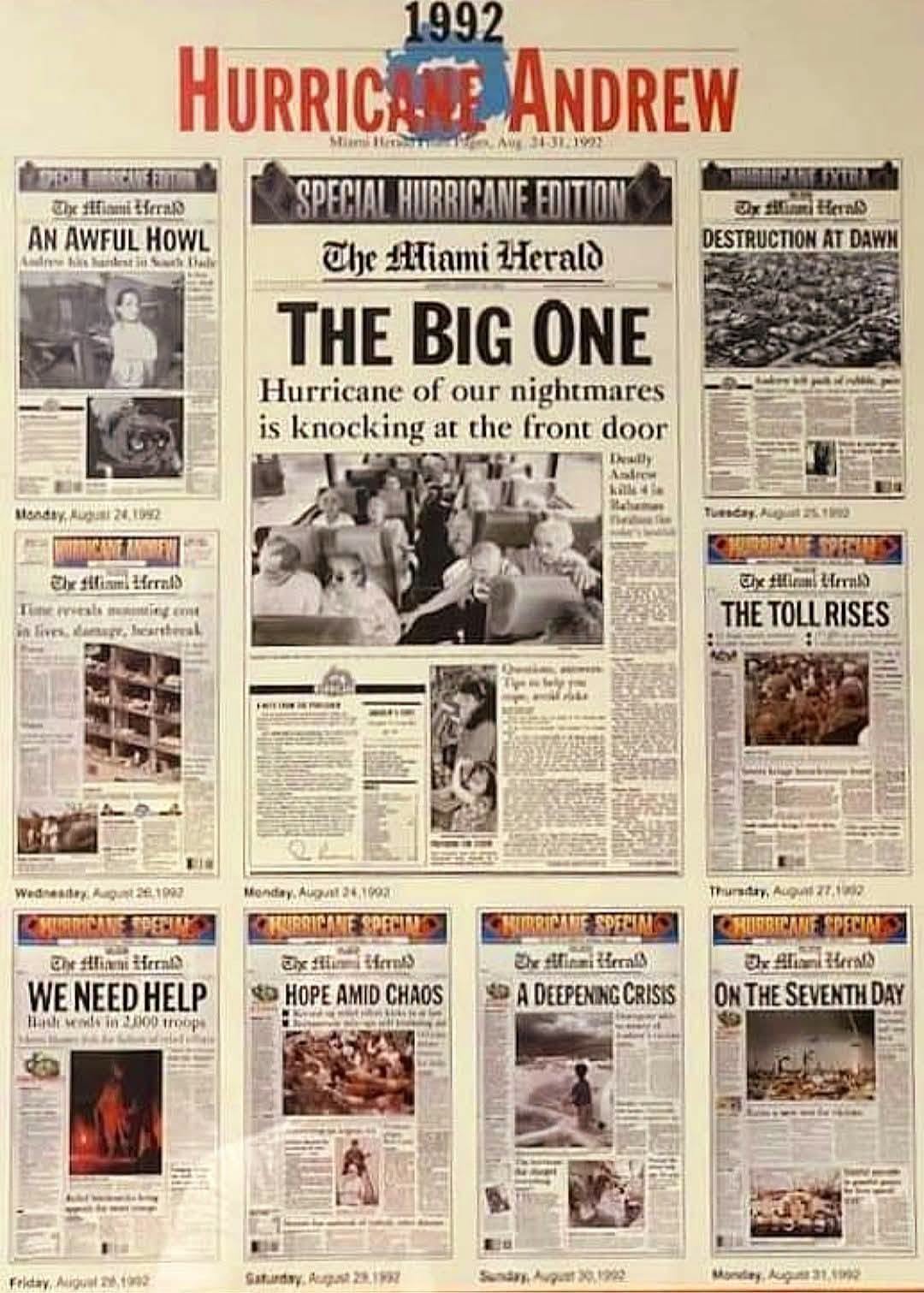
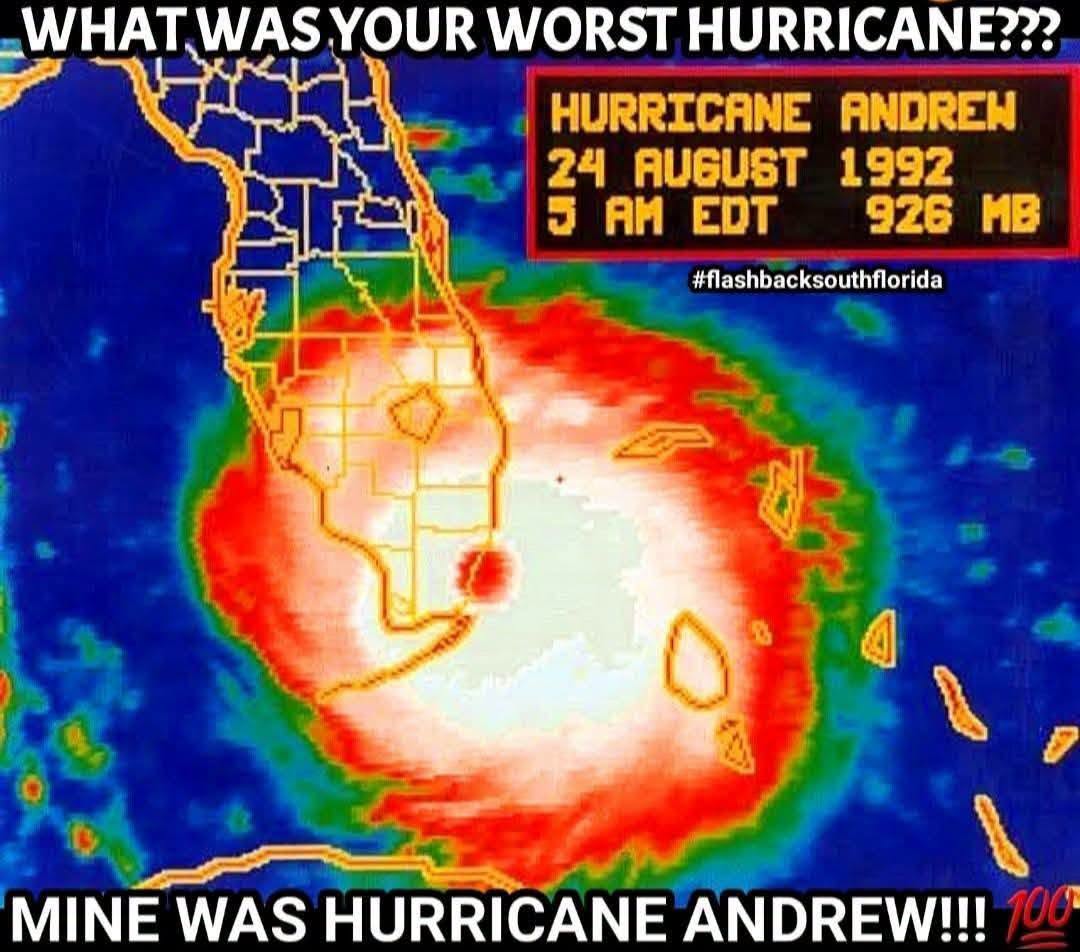
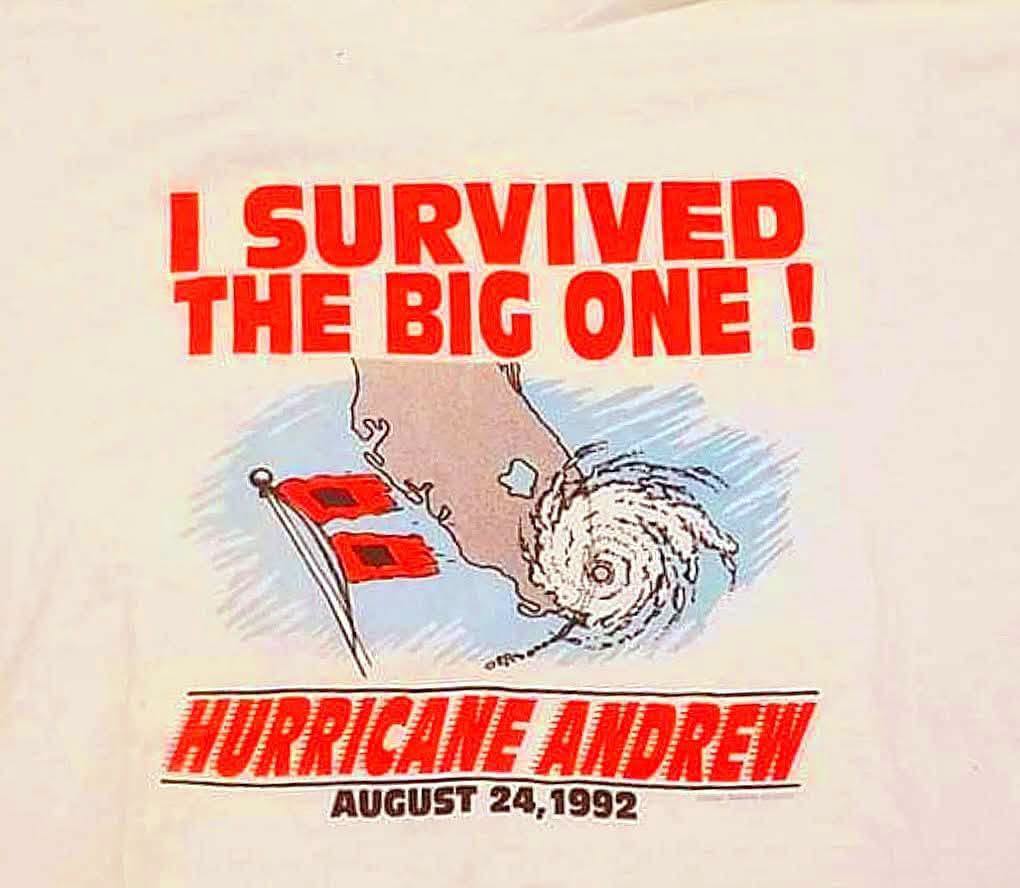
The landscape was rebuilt, but the memory remained.
But anyone who lived through that night still understands certain things without explanation.
We understand why an old battery radio is worth keeping. Why shutters are not decoration. Why bottled water bought early is cheaper than regret bought late. Why a hurricane “turning away” is not gone until it is truly gone. And why the sound of wind against a house can awaken a memory more than three decades old.
Andrew arrived in the dark on Monday, August 24, 1992. Its center crossed Elliott Key at 4:40 a.m., reached the mainland near Homestead around 5:05 a.m., and moved into the Gulf later that morning.
Meteorologically, it was over in hours.
In Cutler Ridge, it lasted for years.
And in memory, it has never entirely left.
